
by Kevin Popović
Share
by Kevin Popović
Share
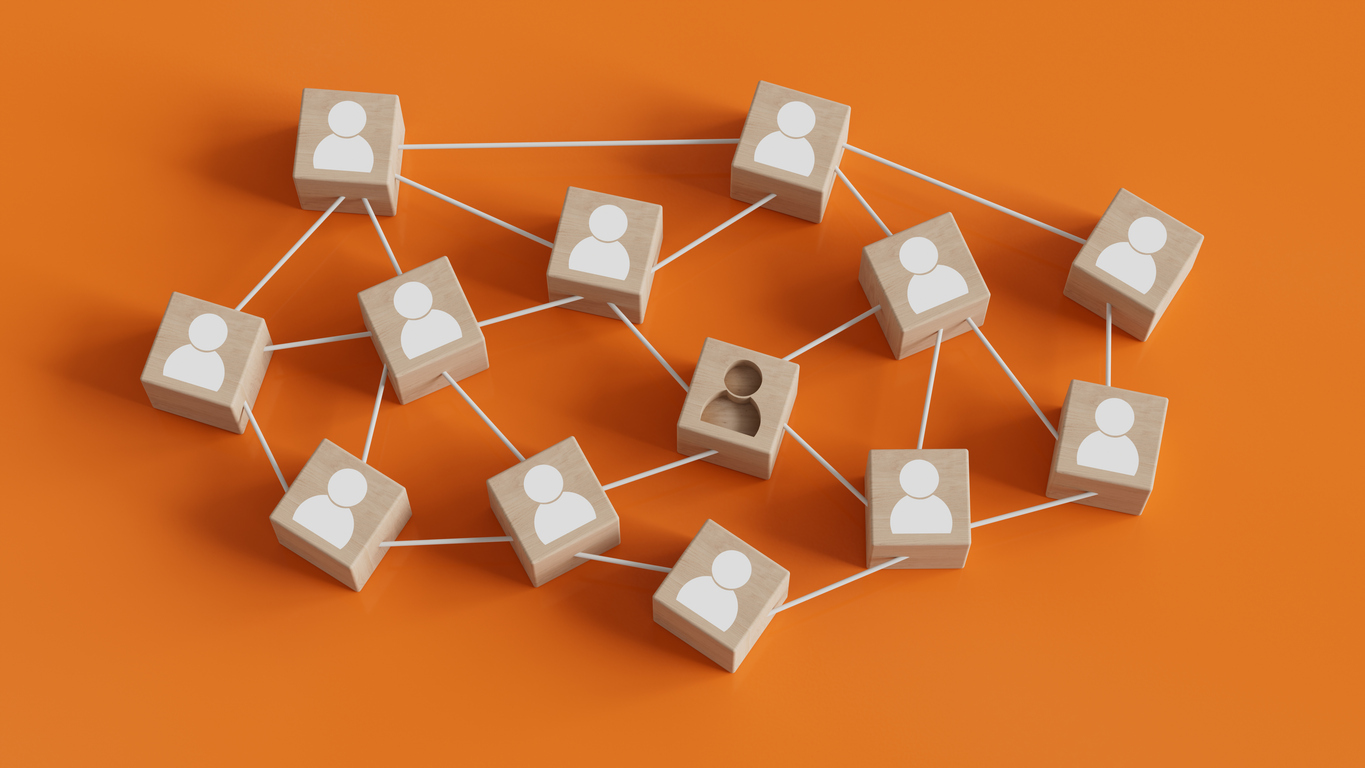
The organizational chart was born in the Industrial Age. It worked when factories ran on predictable shifts, when success was measured by units produced, and when people held the same job for decades. Boxes and lines made sense then.
But that world is gone.
Fast Company recently declared that AI will “kill the org chart.” They’re right. AI moves faster than any assembly line ever could. It doesn’t wait for a manager to sign off, a committee to meet, or the time to be right. Rigid hierarchies don’t just slow you down — they waste potential, stall decisions, and leave employees waiting for permission instead of solving problems.
Relying on an org chart today is like trying to navigate with a paper folding map while competitors use GPS. To stay competitive, leaders must embrace four essential shifts:
-
From change management to change readiness.
-
From title and rank to skills and impact.
-
From knowledge and skills to adaptability and curiosity.
-
From managers as gatekeepers to managers as coaches.
These shifts are real — but they’re only the beginning. If the org chart is dying, executives need more than a new structure. They need a new way of thinking about people, culture, and the role of AI. That’s where the AMPLIFIED! Framework comes in.
Shift 1: From Change Management to Change Readiness
Most leaders still treat change like a project: define the scope, build the plan, manage resistance. But that mindset assumes stability between “change events.” In reality, disruption is constant — new tech, new markets, new expectations every quarter.
The real risk isn’t poor execution of change projects — it’s that employees never build the muscle of adaptability. Companies pour millions into new systems or training rollouts, but if their people aren’t confident they can adjust, the initiatives stall before they start.
Insight: Readiness isn’t about managing change better — it’s about building a workforce that expects it, embraces it, and moves through it with confidence.
Solution:The Creative Confidence Assessment helps leaders see where their people stand today. It measures how confident employees feel in their creativity and problem-solving — the very skills that predict adaptability in the face of constant change.
Learning Outcomes:
- Reveal how individuals view their creative capacity — the foundation of adaptability.
- Benchmark readiness across teams to spot strengths and vulnerabilities.
- Provide data leaders can use to prioritize development, coaching, and support strategies.
Shift 2: From Title and Rank to Skills and Impact
The org chart was designed for jobs: fixed titles, static responsibilities, clear boxes. But today, AI and automation are breaking those boundaries. Work flows across teams, projects, and tools that evolve faster than job descriptions can keep up.
The hidden risk? Leaders keep reskilling for roles that may not exist tomorrow, instead of cultivating skills that flex across opportunities. It’s like preparing players for a single position when the entire game keeps changing.
Insight: Competitive advantage no longer comes from the right jobs on the chart — it comes from the skills your people bring to whatever challenge arises.
Solution:The Creative Confidence Index (CCI) gives leaders a clear benchmark of their organization’s creative readiness. By measuring individual confidence, mapping persona distribution, and assessing cultural support, the CCI reveals whether your people have the skills — and the environment — to adapt when roles shift.
Learning Outcomes:
- See beyond job titles to the creative capabilities driving adaptability.
- Benchmark readiness for change at the team and organizational level.
- Use CCI data to design learning and development strategies around transferable skills, not static roles.
Shift 3: From Knowledge and Skills to Adaptability and Curiosity
Most hiring still focuses on technical skills that look good on a résumé. The problem? Those skills are often obsolete the moment a new tool, regulation, or market change appears.
The hidden cost isn’t just wasted training budgets — it’s a workforce that feels unprepared and resistant when faced with the unexpected. If employees only know “the right answer,” they freeze when the question changes.
Insight: Future-ready organizations don’t just hire for skills — they develop adaptability, curiosity, and collaboration. These are the human capacities AI can’t automate, and they determine whether people lean into disruption or avoid it.
Solution:The Building Creative Confidence Workshop develops these capacities through experiential learning. Employees practice idea generation, collaboration, and resilience in real-world scenarios that build both confidence and competence.
Learning Outcomes:
- Strengthen individual creative confidence through hands-on practice.
- Improve collaboration by testing and sharing ideas in real time.
- Equip teams with the tools to solve problems in uncertain environments.
Shift 4: From Managers as Gatekeepers to Managers as Coaches
Traditional managers were rewarded for oversight — approving requests, checking compliance, and keeping people “in line.” But as AI takes over routine oversight, gatekeeping no longer adds value. In fact, it slows teams down.
The hidden cost? When managers act as gatekeepers, decisions stall, innovation bottlenecks, and employees learn to wait for permission instead of solving problems themselves. In a world where speed and adaptability define competitiveness, gatekeeping is an anchor.
Insight: The new role of a manager isn’t to control — it’s to coach. Coaching means helping teams frame challenges, unlock solutions, and move faster with confidence.
Solution (Part 1): Problem Statements + Generative AI trains leaders to define the right problems so AI and people can solve them together. When managers frame challenges clearly, they shift from bottlenecks to catalysts — and clarity becomes the foundation of effective coaching.
Learning Outcomes:
- Apply a repeatable model for problem definition.
- Align teams around shared clarity.
- Use AI effectively by asking better questions.
Solution (Part 2): Design Thinking + Generative AI equips managers to lead teams through solution development. They learn to prototype, test, and scale new structures, workflows, and business models — replacing the old org chart with systems designed for humans and powered by AI.
Learning Outcomes:
- Apply human-centered design methods to business challenges.
- Integrate AI to accelerate testing and scaling.
- Create adaptive, future-ready organizational models.
The Future Isn’t Flat. It’s Fluid.
The org chart was designed to hold still. But AI guarantees motion. The companies that thrive won’t be the ones with the neatest hierarchy; they’ll be the ones where:
- People are confident in their creativity and ready for change.
- Cultures reward skills that transfer, not titles that expire.
- Talent is developed for adaptability, curiosity, and collaboration.
- Managers coach with clarity, framing the right problems and unlocking solutions powered by people and AI.
That’s the post-org chart organization.
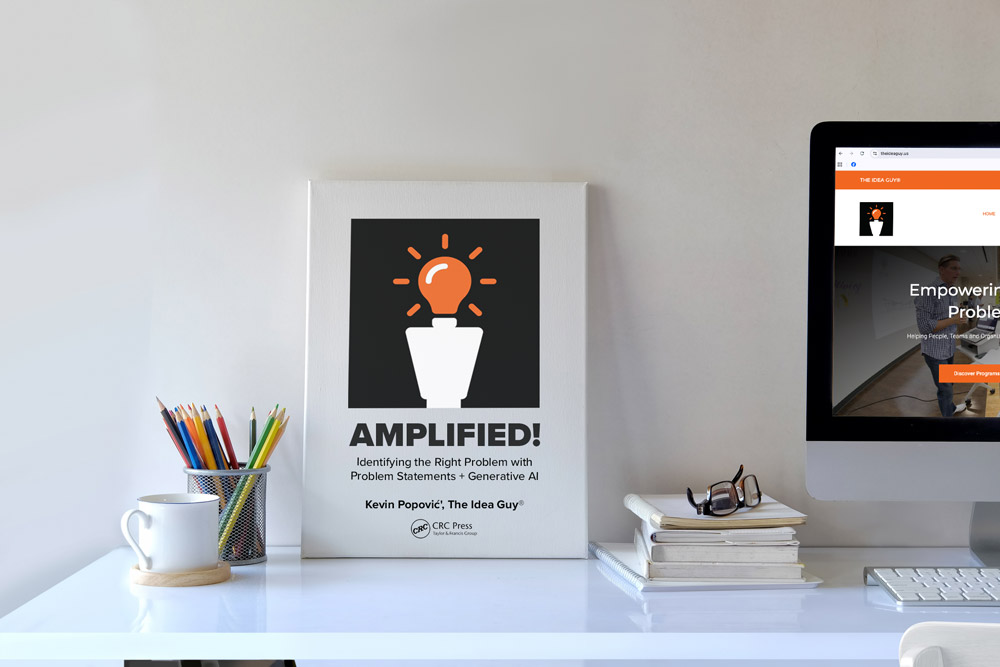
AMPLIFIED! provides the framework. The Creative Confidence programs provide the practice. Together, they prepare leaders and their organizations to thrive in a world where AI doesn’t just disrupt—it amplifies what makes us human.
STAY IN THE LOOP
Subscribe to our free newsletter.

HI × AI (pronounced H-I times A-I) is a mindset built on a framework that can be expressed as a formula.

When we integrate HI + AI, we create what Wheatley envisioned — organizations that are intelligent in both senses: data-driven and deeply human.
An excerpt from my forthcoming book, AMPLIFIED! How to Identify the Right Problem and Create the Right Solution with Human Insights x Generative AI